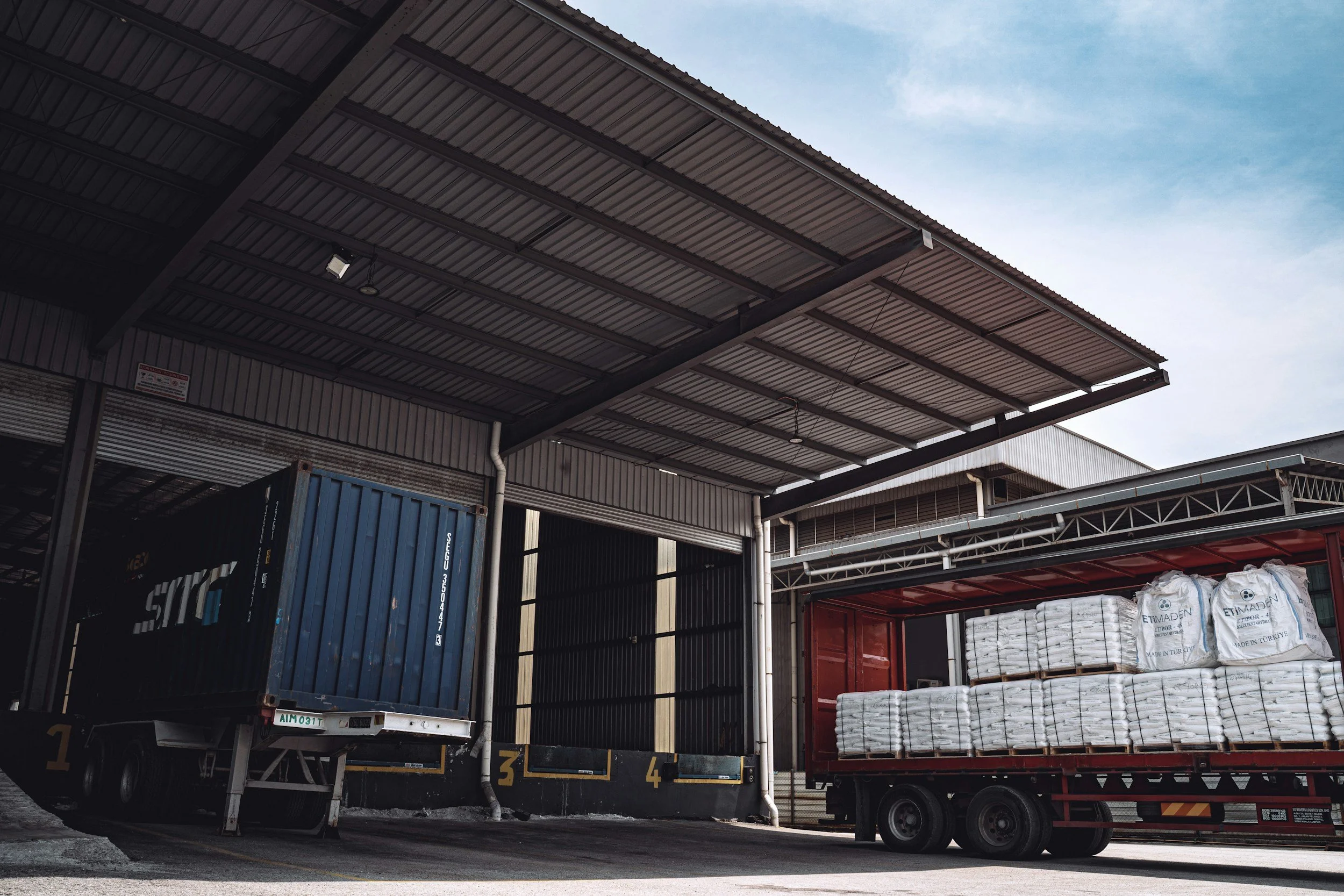
Selling returns and overstock by the truckload should take work off your distribution center, not add to it. Whether it does depends mostly on logistics: how loads are staged, how pickups are scheduled and how well the two sides communicate. This is a practical look at distribution center liquidation from the dock's point of view, and what a liquidation partner needs from you to keep trailers moving.
Why distribution center liquidation is a logistics problem first
The inventory itself is rarely the hard part. The hard part is that secondary-market product competes for the same doors, the same floor and the same people as your outbound freight. A liquidation program works when it fits into the dock's rhythm. It fails when trailers sit, pickups get missed or nobody knows who to call.
A clear picture of the flow
Before the first pickup, a liquidation partner needs to understand what's coming:
What categories and conditions. Returns, overstock, scratch-and-dent, damaged-box or a mix.
How fast it builds. A trailer a week is a different program from a trailer a month.
How it's prepared. Palletized and wrapped, floor-loaded, or a combination.
Whether there's a manifest. A list of what's on each load helps everyone downstream, even if it's basic.
Dock schedules and pickup windows
Every DC runs appointments differently. Some want pickups in a narrow window on certain days. Others work drop-trailer programs, where an empty trailer is left to be loaded at your pace and swapped when it's full. Either can work. What matters is that the partner knows the rules up front:
Receiving and shipping hours, and any blackout days
How appointments are booked and how much notice you need
Check-in procedures for drivers
How long a trailer is allowed to sit on your yard
A good partner treats your appointment times as fixed and arranges freight around them, not the other way around.
One point of contact on each side
Most pickup problems come down to communication. A carrier is running late, a trailer filled sooner than expected, the paperwork doesn't match. These get solved in minutes when each side has one named person who answers the phone. They drag on for days when messages bounce between departments.
Consistent loads and clean paperwork
Consistency helps both sides. When loads are built the same way each time, the buyer knows what to expect and can keep the program running without renegotiating every trailer. A few habits make a difference:
Load to a consistent standard, so trailers are full and stable in transit.
Keep the load's category mix reasonably steady, or flag it when it changes.
Make sure the bill of lading and any manifest match what's actually on the trailer.
Give a heads-up when a trailer is close to full, so the pickup can be lined up early.
What you should expect in return
The responsibilities run both ways. From a liquidation partner, a DC should expect carriers that show up when scheduled, quick answers when something changes, and no surprises about where trailers are going. If you're still choosing how to move this inventory, our guides to how truckload liquidation works and the three ways to liquidate excess inventory cover the bigger picture.
At SVSS Liquidation, we buy by the full truckload and ship loads direct from supplier distribution centers to independent retailers in multiple states. That only works if pickups run smoothly, so dock coordination is a big part of what we do every day.
Let's talk about your dock
If secondary-market inventory is tying up doors or floor space at your distribution center, we'd like to hear how your operation runs. Contact SVSS Liquidation and we'll see if a truckload program fits.